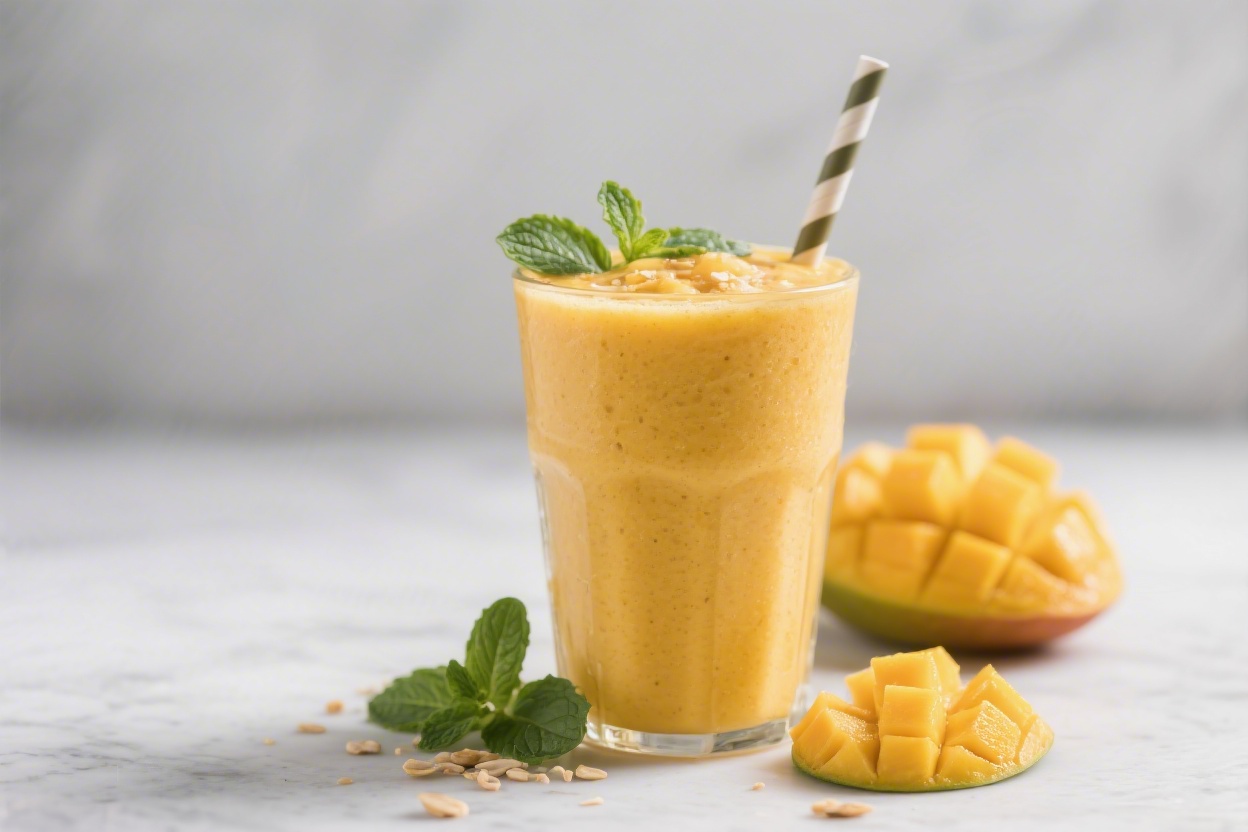
Protein-Packed Mango Smoothie Recipes for Energy Boost – Simple, Bright, and Satisfying
Sunny, sweet mango makes a smoothie feel like a small vacation, and adding protein turns it into real fuel. These protein-packed mango smoothies are perfect for busy mornings, pre-workout energy, or a steady afternoon lift. They’re creamy, refreshing, and easy to customize with what you have.
You’ll find simple steps, smart swaps, and tips to get the texture just right. Let’s make a smoothie that tastes great and keeps you going.
Protein-Packed Mango Smoothie Recipes for Energy Boost - Simple, Bright, and Satisfying
Ingredients
- Frozen mango chunks (1 to 1½ cups): For sweetness and body. Fresh mango works, but frozen gives better thickness.
- Protein powder (1 scoop): Whey, pea, soy, or collagen. Choose vanilla or unflavored for versatility.
- Milk (¾ to 1 cup): Dairy, almond, soy, or oat. Adjust for thickness.
- Greek yogurt (¼ to ½ cup): Optional, for creaminess and extra protein.
- Nut or seed butter (1 tablespoon): Almond, cashew, peanut, or sunflower seed butter for healthy fats and staying power.
- Banana (½ medium): Optional, for extra creaminess and subtle sweetness.
- Fresh lime or lemon juice (1 teaspoon): Brightens and balances the sweetness.
- Honey or maple syrup (1 to 2 teaspoons): Optional, adjust to taste depending on mango ripeness.
- Ice (a few cubes): Optional, if using fresh mango and you want it colder.
- Spinach or kale (1 cup, loosely packed): Adds micronutrients with almost no flavor in spinach’s case. Chia or ground flax (1 tablespoon): Omega-3s and fiber.
- Turmeric (a pinch) + black pepper (a pinch): Anti-inflammatory duo that pairs nicely with mango.
- Coconut flakes (1 tablespoon): Tropical flavor and texture.
- Frozen pineapple (¼ cup): Boosts tangy sweetness.
Instructions
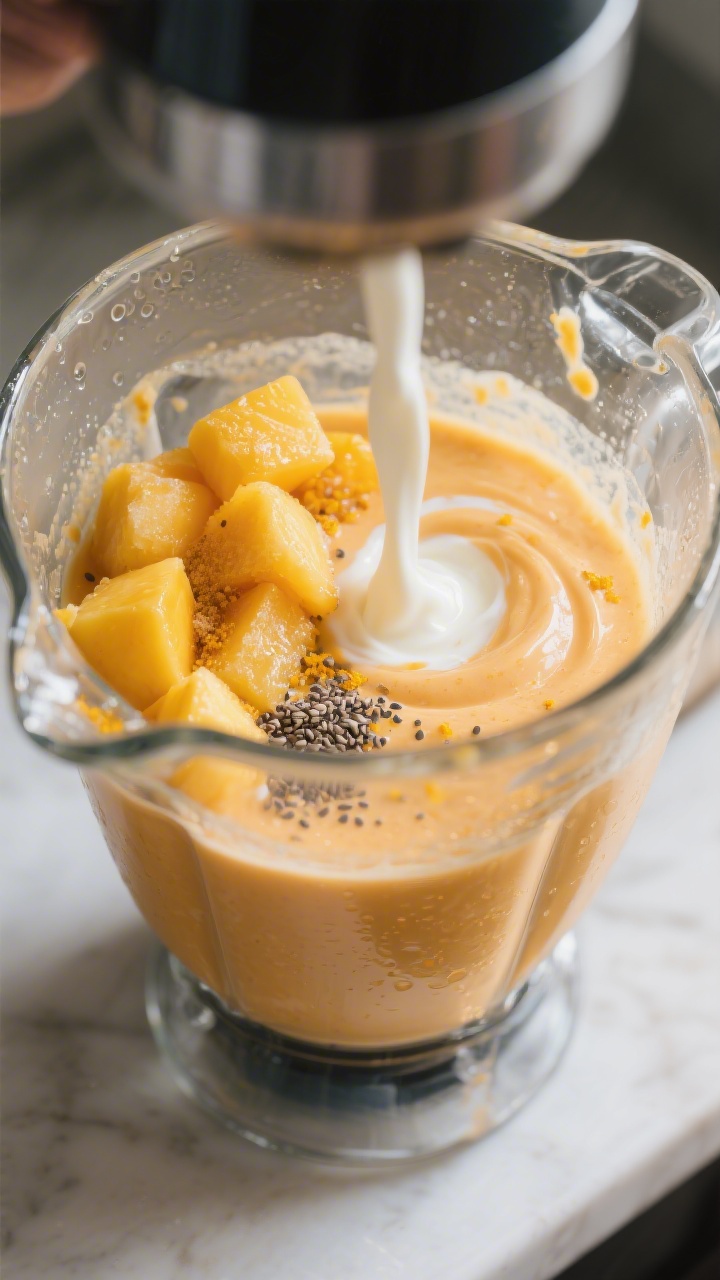
- Add liquids first: Pour milk into the blender. This helps the blades catch the ingredients smoothly.
- Layer soft ingredients: Add yogurt, nut or seed butter, banana (if using), and citrus juice.
- Add powders and boosters: Toss in protein powder and any extras like chia, turmeric, or greens.
- Top with frozen fruit: Add the frozen mango (and pineapple, if using). This keeps things thick and creamy.
- Blend until smooth: Start low to break things up, then move to high for 30–60 seconds. Scrape the sides if needed.
- Taste and adjust: If it’s too thick, add a splash more milk. If it needs sweetness, add a touch of honey or maple.
- Serve right away: Pour into a chilled glass or insulated cup. Add coconut flakes or a squeeze of lime on top if you like.
What Makes This Recipe So Good
- Balanced energy: The combo of mango, protein, and healthy fats keeps you full and focused without a sugar crash.
- Customizable: Use dairy or plant-based milk, your favorite protein powder, and fresh or frozen fruit—whatever you like.
- Great texture: Frozen mango gives a thick, milkshake-like feel with no ice watering it down.
- Nutrient dense: Mango brings vitamin C and fiber; add greens, seeds, or yogurt for even more goodness.
- Fast and fuss-free: Toss everything in the blender and you’re done in minutes.
What You’ll Need
Below are base ingredients for a classic protein mango smoothie, followed by a few add-ins to boost flavor and nutrition.
- Frozen mango chunks (1 to 1½ cups): For sweetness and body. Fresh mango works, but frozen gives better thickness.
- Protein powder (1 scoop): Whey, pea, soy, or collagen.Choose vanilla or unflavored for versatility.
- Milk (¾ to 1 cup): Dairy, almond, soy, or oat. Adjust for thickness.
- Greek yogurt (¼ to ½ cup): Optional, for creaminess and extra protein.
- Nut or seed butter (1 tablespoon): Almond, cashew, peanut, or sunflower seed butter for healthy fats and staying power.
- Banana (½ medium): Optional, for extra creaminess and subtle sweetness.
- Fresh lime or lemon juice (1 teaspoon): Brightens and balances the sweetness.
- Honey or maple syrup (1 to 2 teaspoons): Optional, adjust to taste depending on mango ripeness.
- Ice (a few cubes): Optional, if using fresh mango and you want it colder.
Optional boosters:
- Spinach or kale (1 cup, loosely packed): Adds micronutrients with almost no flavor in spinach’s case.
- Chia or ground flax (1 tablespoon): Omega-3s and fiber.
- Turmeric (a pinch) + black pepper (a pinch): Anti-inflammatory duo that pairs nicely with mango.
- Coconut flakes (1 tablespoon): Tropical flavor and texture.
- Frozen pineapple (¼ cup): Boosts tangy sweetness.
Instructions
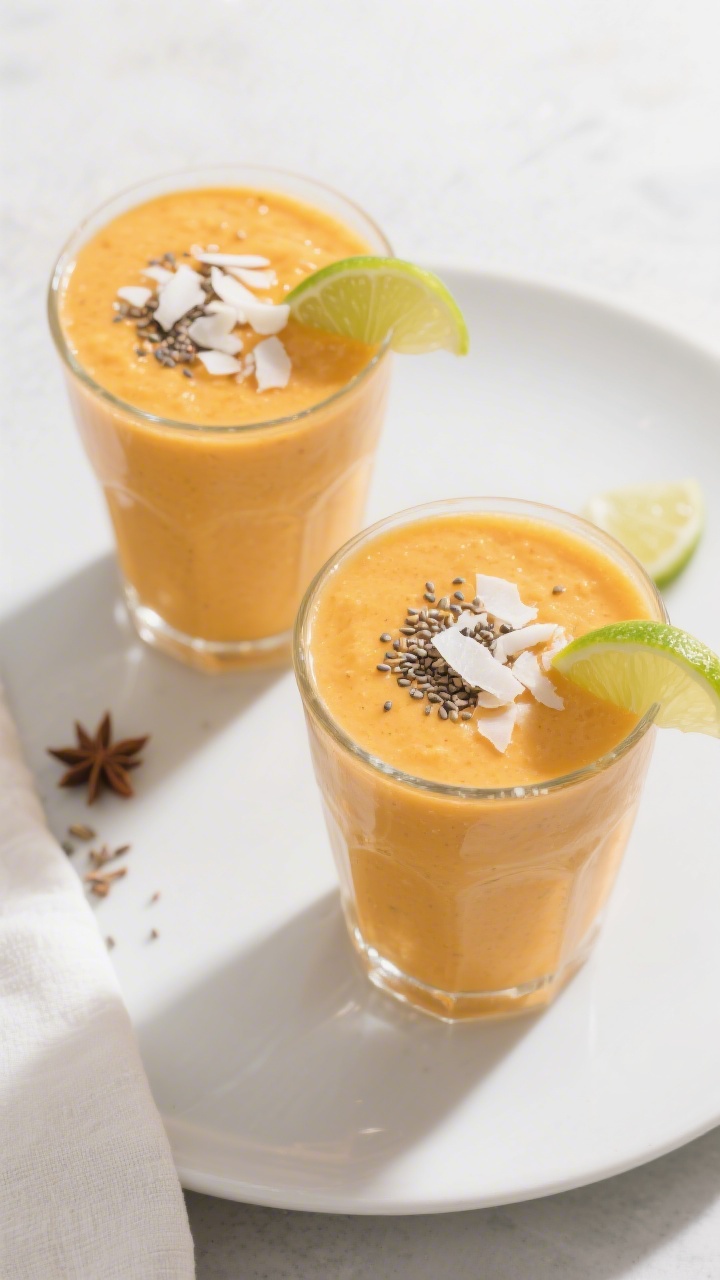
- Add liquids first: Pour milk into the blender. This helps the blades catch the ingredients smoothly.
- Layer soft ingredients: Add yogurt, nut or seed butter, banana (if using), and citrus juice.
- Add powders and boosters: Toss in protein powder and any extras like chia, turmeric, or greens.
- Top with frozen fruit: Add the frozen mango (and pineapple, if using).This keeps things thick and creamy.
- Blend until smooth: Start low to break things up, then move to high for 30–60 seconds. Scrape the sides if needed.
- Taste and adjust: If it’s too thick, add a splash more milk. If it needs sweetness, add a touch of honey or maple.
- Serve right away: Pour into a chilled glass or insulated cup.Add coconut flakes or a squeeze of lime on top if you like.
How to Store
- Short term (up to 24 hours): Store in an airtight jar in the fridge. Fill to the very top to minimize air and oxidation.
- Reblend before drinking: Separation is normal. Shake well, or reblend with a few ice cubes or a splash of milk.
- Freeze as smoothie packs:</-li> Portion mango, banana, and add-ins in freezer bags.In the morning, dump into the blender with milk and protein powder.
- Full smoothie freezing: Freeze in individual portions for up to 2 months. Thaw in the fridge overnight and reblend for the best texture.
Why This is Good for You
- Steady energy: Protein and healthy fats slow digestion, helping prevent energy dips.
- Immune support: Mango is rich in vitamin C and beta-carotene, which support skin and immune health.
- Muscle recovery: A solid protein source helps repair muscle tissue after workouts.
- Digestive support: Fiber from fruit, seeds, and greens supports gut health and satiety.
- Hydration: The fruit and milk base contribute to overall fluid intake.
Pitfalls to Watch Out For
- Too much sugar: Mango is sweet on its own. If you add banana and pineapple, you may not need honey or syrup.
- Gritty texture: Some protein powders can be chalky.Blend longer, add yogurt for creaminess, or try a different brand.
- Watery results: Using too much liquid or melting fruit can thin it out. Start with less milk and add gradually.
- Overpowering flavors: Strong powders or too much turmeric can take over. Start with small amounts and taste as you go.
- Allergen mix-ups: Check labels if you’re avoiding dairy, soy, or nuts.Choose plant milks and seed butters as needed.
Variations You Can Try
- Tropical Greens: Mango + spinach + pineapple + coconut milk + vanilla protein. Bright, creamy, and not “green” tasting.
- Mango Lassi Power: Mango + Greek yogurt + cardamom + honey + unflavored whey. Add a splash of milk to blend.
- Spicy Sunrise: Mango + ginger + turmeric + black pepper + banana + pea protein + almond milk.Warm spice, cooling fruit.
- Creamy Coconut Mango: Mango + coconut milk + collagen + lime juice + chia. Thick, silky, and tropical.
- Mango Matcha Energizer: Mango + matcha powder + oat milk + vanilla protein. Gentle caffeine with fruity sweetness.
- High-Fiber Boost: Mango + flax + chia + spinach + soy milk + unflavored protein.Extra filling and great for mornings.
FAQ
Can I make this without protein powder?
Yes. Use Greek yogurt, cottage cheese, or silken tofu for protein. You can also add hemp hearts or peanut butter, though those add more fat than powder per gram of protein.
Is fresh or frozen mango better?
Frozen mango gives a colder, thicker smoothie and is usually sweeter and more consistent.
Fresh mango works well too; just add a few ice cubes for chill and body.
How do I make it vegan?
Use plant milk (almond, soy, oat), a dairy-free yogurt, and a vegan protein powder like pea or soy. Maple syrup works as a sweetener if needed.
What protein powder tastes best with mango?
Vanilla whey or vanilla pea protein blends well with mango’s sweetness. Unflavored powders are great if you want the fruit to shine and you’re adding yogurt or spices.
How can I lower the carbs or sugar?
Use less mango and add ice for volume, skip banana and sweeteners, and rely on vanilla protein and citrus for flavor.
You can also add extra greens and chia for more fiber.
Can I prep this the night before?
Yes. Blend it, store in a sealed jar in the fridge, and shake or reblend in the morning. For the best texture, keep the fruit frozen as a “pack” and blend fresh with milk and protein.
What if my smoothie is too thick?
Add milk in small splashes and blend again until it reaches your favorite consistency.
Warm liquids thin it faster, but a little extra cold milk keeps it chilled and creamy.
Will it keep me full?
It should. Aim for at least 20–30 grams of protein, include healthy fats like nut butter or chia, and consider adding greens or oats for extra fiber if you need more staying power.
Final Thoughts
A great mango smoothie is more than sweet fruit in a glass—it’s a quick, nourishing meal you can adjust to your goals. Keep the base simple, then play with protein, greens, and spices until it’s your perfect blend.
With the right balance of mango, protein, and healthy fats, you’ll get bright flavor and steady energy in every sip. Keep some frozen mango on hand, and you’re always minutes away from a satisfying boost.
Printable Recipe Card
Want just the essential recipe details without scrolling through the article? Get our printable recipe card with just the ingredients and instructions.